
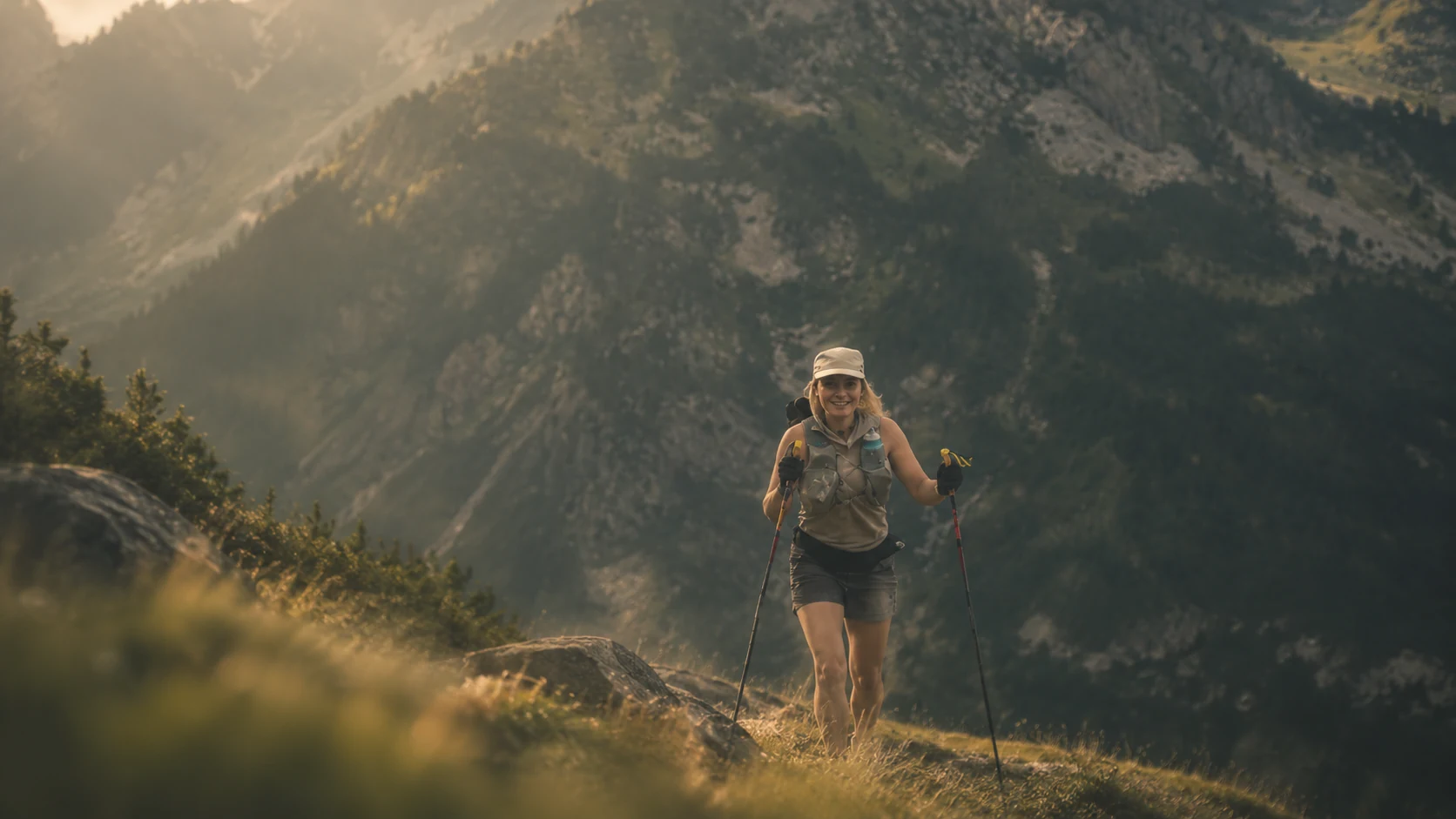
Know the demand. Start with the race's total climb and descent, then look at how it is spread: a few long climbs or many short, steep ones. Match your practice to the course: look at the length, steepness and surface of the climbs and descents.
Train uphill regularly. Put climbing into your normal week, not only into long runs. Practise both running and hiking, and learn which lets you keep a sustainable effort on each kind of climb.
Use poles well. If you will race with poles, train with them. Practise getting them out and putting them away while you move.
Do not forget the descents. Downhill running causes much of the muscle soreness after a mountain race. Build up descending gradually, on terrain like the race, so your legs and feet get used to it.
Add strength. Leg strength and stability help on long climbs. Include appropriate strength work alongside gradually increased downhill practice. Short, regular sessions done consistently work better than occasional hard ones.
Count climbing as load. A week with a lot of climbing is harder than its kilometres suggest. Watch your recovery and plan easier weeks after big vertical weeks.
Live far from the mountains? Use what you have: hill repeats, stairs and a treadmill with an incline. Then add trips to real mountain terrain before the race when you can.